What Is Revenue Leakage? Causes and Prevention
Revenue leakage is money you earned but never collected. Here's what causes it in SaaS and how to prevent it.
5 mins
January 15, 2026
Key Takeaways
You re-negotiated the deal and signed the contract, but three months later you're still sending invoices for the old lower price. That gap between the agreed-upon price and the amount you’re collecting is revenue leakage.
For SaaS companies running on subscriptions, usage-based pricing, and renewals, revenue leakage quietly erodes ARR (annual recurring revenue) in ways that don't register until the damage compounds.
Most founders discover the problem at the worst possible moment, like during fundraising when investors ask why billing numbers don't match sales data.
This guide covers what revenue leakage looks like in early-stage SaaS, the six common causes, and practical steps to prevent it without investing in expensive enterprise software or a full-time hire just to manage billing.
What Does Revenue Leakage Look Like?
Revenue leakage is the gap between what customers agreed to pay contractually and what you actually bill them. You earned the money according to your contracts, but it never reaches your bank account because of billing errors, missed invoices, or disconnected systems.
Here are a few examples of revenue leakage:
- Mid-cycle upgrades that never get billed: A customer upgrades from your $5,000/month plan to your $12,000/month plan halfway through the billing period. The $7,000 difference for the partial month never appears on an invoice because no one remembers to calculate it. That revenue is lost and likely unrecoverable.
- Auto-renewals without renewal invoices: An annual contract "auto-renews" according to its terms, but no one sends the renewal invoice. The customer keeps using the product for free while you assume payments are coming. Many renewals also include standard price increases that never get applied, compounding the loss. Months pass before anyone notices.
- Usage overages tracked but never invoiced: Engineering tracks API calls in an internal dashboard showing customers exceeding their included limits. But those overages never appear as line items on invoices because usage data doesn't automatically flow into the billing system.
- Temporary discounts that become permanent: Sales extends a 20% discount "for three months" to close a deal. The discount terms live in a PDF contract, not as structured data in a system that tracks expiration dates. Three months pass, then six, then twelve. No one removes the discount from the billing system because no one remembers it exists. ARR shrinks indefinitely while everyone assumes the customer pays full price.
Each of these scenarios shares a common thread: disconnected systems and manual processes that let revenue slip through the cracks.
What Are The Causes of Revenue Leakage in SaaS?
If you're seeing revenue leakage in your company, one or more of these causes are likely at play:
1. Manual Billing
Every invoice created manually is a chance to lose money. When an employee copies pricing from an email thread into a billing system, they might grab the wrong number, skip a line item, or miss a rate increase that was agreed months ago.
These errors go unnoticed because the contract lives in a PDF or email thread, not as structured data in a system of record. There's no automatic check to ensure billing matches what was agreed.
2. Renewals That Don't Get Invoiced
Contract end dates often live in a CRM field or a PDF buried in someone's inbox, not as structured data in a billing system that can act on them. Without that connection, renewals slip by unnoticed. Customers keep using the product while you assume payments are coming.
By the time anyone realizes the renewal invoice never went out, you're stuck asking for months of back-payment or writing off the revenue entirely.
3. Inconsistent Pricing and Discounts
Without an organized system, custom deals create billing confusion. For example, sales might promise a ramped pricing structure or a temporary discount. But this information has to make it into the billing system correctly and get updated at the right time.
4. Disconnected Usage Tracking
If your product tracks API calls, storage, seats, this data needs to automatically flow into invoices. Otherwise, an employee has to manually export, calculate, and enter overage charges, which leads to revenue leakage.
5. Data Discrepancies in CRM and Billing Platforms
Data discrepancies between your CRM and billing platforms can also lead to lost revenue. For example, a contract amendment is added to the CRM but never processed in billing, so finance reports one ARR figure while sales reports another.
6. No Collections Process
Sending an invoice doesn't mean you'll get paid. Invoices sit unpaid for weeks because no one follows up, or payments fail silently without automated retries. Without a systematic collection process, an employee has to manually track outstanding invoices and chase down customers for payment.
Every cause above has the same root: critical contract data is siloed across PDFs, email threads, CRM fields, and spreadsheets instead of living as structured data in a single system of record. When no system connects what was agreed to what gets billed, revenue leakage becomes inevitable. Fix the data problem, and revenue leakage becomes preventable.
How to Prevent Revenue Leakage in SaaS
Once you’ve diagnosed revenue leakage, take the following steps to prevent it from happening again:
1. Connect Contracts to Billing
When you close a deal, the terms (including pricing, billing frequency, discount expiration dates, and renewal terms) you negotiated should flow directly into billing, without requiring re-keying prices or setting up subscriptions separately.
Your billing system should generate invoices on schedule and when changes happen, including upgrades, downgrades, renewals, and amendments. You shouldn't have to remember to send an invoice because the system should handle it based on the contract.
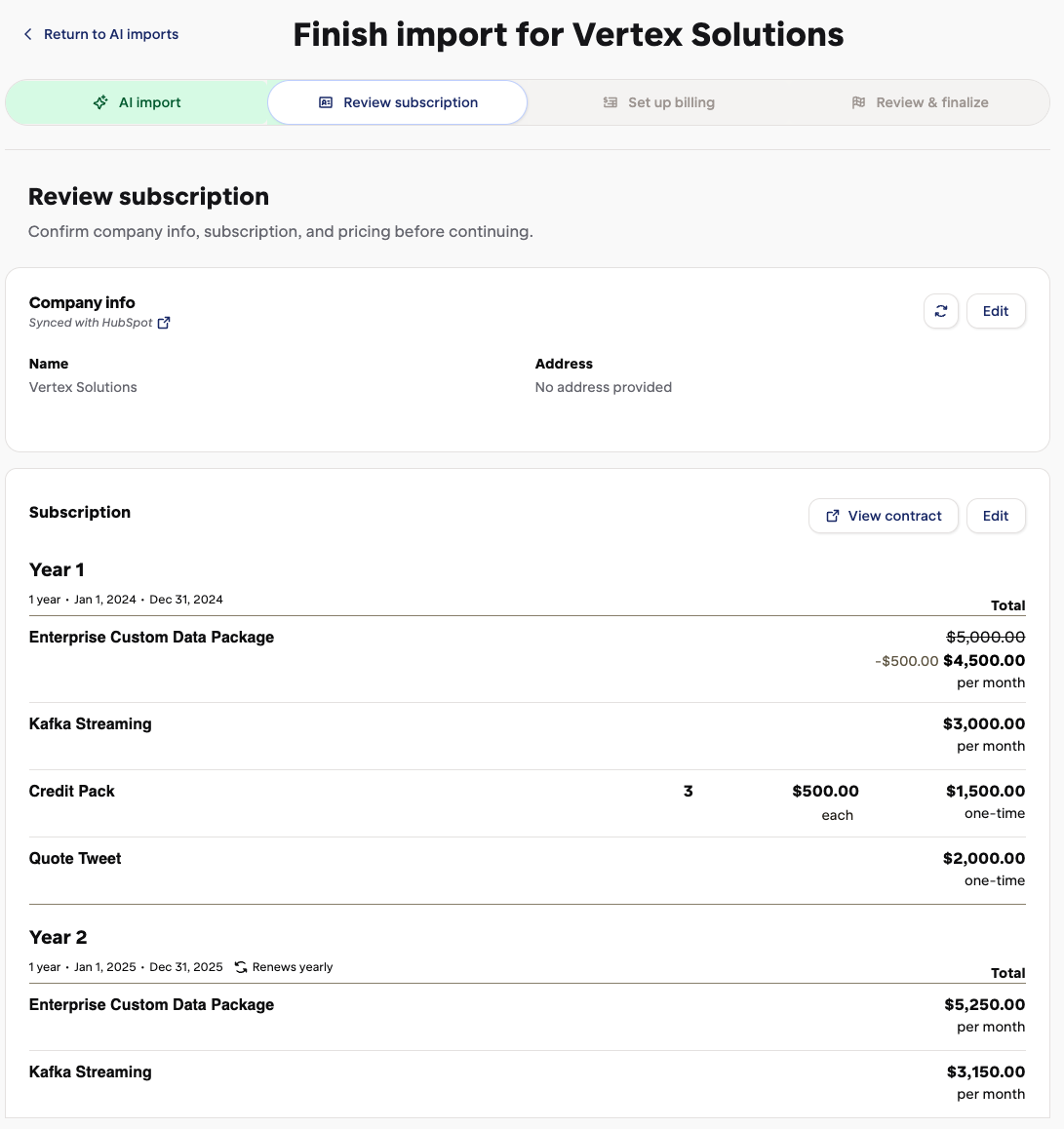
Turnstile combines quoting and billing in one platform, so the terms you negotiate automatically flow into recurring invoices without manual data entry. When a quote is signed, the subscription is created automatically with the correct pricing, billing schedule, and renewal dates already configured. No manual setup required.
2. Make Contracts Actionable
PDF contracts require manual billing configuration. But if the contract is stored as structured data in a quote-to-cash platform, you can automate billing. A quote-to-cash platform includes fields for price, term, billing frequency, renewal date, and discount expiration. When you amend a deal, the billing adjusts automatically.
Turnstile's AI-powered contract term extraction captures renewal dates and payment terms from signed agreements and flows them directly into billing, without manual data entry.
3. Bill Usage Automatically Without CSV Exports
If you're running usage-based or hybrid pricing, your metering should flow directly into invoices without manual exports or calculations.
Make sure your product tracks the same units your billing uses. If you're tracking API calls, bill on API calls, not a different metric that requires translation. When customers exceed their included usage, the system should calculate overage charges and add them to the next invoice automatically.
4. Remove Data Discrepancies
To eliminate data discrepancies, connect your sales and finance tools. For example, when you close a deal in HubSpot or Salesforce, the subscription should be created automatically with the correct terms. Billing data should sync back so everyone sees the same ARR and MRR.
5. Automate Collections and Follow-Ups
Set up automated payment reminders when invoices go unpaid, and customer outreach when payments remain unpaid. For discounts, store discount expiration dates as structured data so your billing system automatically reverts to full pricing when the discount period ends. Your billing platform should also automatically enforce expiration dates.
Revenue Leakage Is Fixable
Most founders discover revenue leakage at the worst possible moment — usually during fundraising, when billing numbers don't match sales data, or during audits, when you realize you forgot to bill customers for months.
The revenue you earn should always reach your bank account. Turnstile is a revenue platform that connects quoting, subscription management, billing, and reporting into a single system. This ensures that the contract terms you negotiate automatically become the invoices you send, eliminating manual data entry and disconnected systems.
Book a demo to get started.
Frequently Asked Questions
What is the difference between revenue leakage and revenue loss?
Revenue loss refers to money you never earned, such as deals that fell through or customers who churned. Revenue leakage is money you earned but failed to collect. You signed the contract and delivered the service, but billing errors, missed invoices, or system gaps prevented the cash from reaching your account.
How do you identify revenue leakage?
Start by comparing contracted amounts against actual invoices and payments. Pull a sample of customer contracts and check whether billing matches the agreed terms, including pricing, discounts, and renewal dates. Look for patterns: customers on expired discounts still paying reduced rates, usage overages that never appeared on invoices, or renewals that happened without corresponding billing events.
What is an example of revenue leakage?
A customer signs a contract with a 15% discount for the first six months. The discount should expire automatically, but no one updates the billing system. The customer continues paying the discounted rate for two years. The difference between what they should have paid and what they actually paid is revenue leakage.
How much revenue do companies lose to revenue leakage?
Revenue leakage varies significantly by company size and billing complexity. SaaS companies with usage-based pricing, custom contracts, or frequent mid-cycle changes tend to see higher leakage rates. Early-stage companies relying on manual billing processes are particularly vulnerable because errors compound as customer count grows.
Who is responsible for preventing revenue leakage?
Revenue leakage sits at the intersection of sales, finance, and operations. Sales creates the contracts, finance handles billing, and operations manages the systems connecting them. In early-stage companies, the founder often owns all three functions. As companies scale, a finance operator or revenue operations role typically takes responsibility for closing the gaps between systems.


.png)
.png)