How to design approval rules that don’t slow deals down
5 mins
September 10, 2026
.png)
An approval process should be judged by whether it catches the deals that carry actual business risk while allowing all others to proceed without friction.
What makes a good approval rule?
A good approval rule and trigger should read as a single sentence. If a defined condition occurs, route the decision to a role, within a stated time, blocking a specific downstream action, and require re-approval only if relevant terms change.
The first part is a specific trigger. The condition has to be observable, something like a discount above twenty percent or payment terms beyond Net 30, rather than a qualitative description of a mood, like a complex deal or a situation that calls for management discretion.
The second part is a role-based owner such as a team or a function, not a named individual. If a rule points to one person by name, that person becomes a bottleneck the week they are out sick or on vacation, and deals pile up behind an empty desk. Routing to a role lets coverage move without rewriting the rule.
The third part is a single decision right. The approver owns the specific question being evaluated and only that question. Finance rules on the payment terms, not on whether the discount feels generous.
The fourth part is an explicit gate, naming the action that cannot happen until it clears. That gate could be sending the quote, generating the order form, or issuing a credit.
The fifth part is an SLA, so that a pending approval has a deadline and doesn’t sit in an indefinite queue.
The sixth part is targeted re-approval. The rule fires again only when something the approver cares about changes, and stays silent otherwise.
Put those together and a finished rule looks like this:
A discount of 11 to 20% routes to the sales manager, a response is expected within 4 business hours, and blocks the quote from being sent, with re-approval required only if the discount increases.
Anyone on the team can read that sentence and know exactly what sets it off, who decides, how long it should take, what it holds up, and when it comes back. Write every rule to that standard.
Turning a vague rule into a usable one
Weak approval processes are built on rules that are vague and cannot be acted on. E.g., a rule like “large or unusual deals need leadership approval” has no observable trigger, names no specific owner, blocks nothing in particular, and gives the rep no way to know in advance whether their deal will trip it.
The fix is to break the vague intent into the specific concerns hiding inside it. The author of that rule probably meant is some combination of three separate things: a deal discounted more heavily than usual, a deal with an unusually large contract value that changes the company’s exposure, or a deal structured in a way that departs from the standard commercial shape.
Each of those should become its own rule with its own trigger, owner, and gate. Discounts above a set percentage route to the sales manager and block the quote. Contract values above a set amount route to a sales executive and block the order form. Nonstandard structures route to deal desk and block the order form. Three legible rules replace one unusable one, and a rep can now look at a deal and know exactly which, if any, apply before they send anything.
Should approvals run in parallel or in sequence?
Independent reviews should run in parallel. Legal, finance, security, and product are each looking at different aspects of the same deal, and none of them needs the others’ answer to do their own work. Putting them in a line so that finance cannot start until legal finishes turns a review that could take a day into one that takes a week, without improving any of the individual decisions.
Sequential approvals should be used when there is an authority ladder, where one decision depends on the outcome of another. E.g., a discount that exceeds the manager’s authority could go to the manager first, and only if the manager approves does it escalate to a VP for the deeper cut.
How fast should an approval be?
Set a response time for each approval, matched to the work the approver actually has to do. Commercial approvals, meaning discount, terms, and pricing, should generally be same-day. These gate the sending of the quote, so every hour one sits is an hour of lost momentum with a customer who is ready to move. Delays in getting a quote to a customer could cause them to reconsider their decision, evaluate another competitor, etc. Reviews that involve real analysis, such as legal, security, and custom-product approvals, can reasonably take a day or more.
Publish SLAs along with an escalation path for each approval so everyone involved knows what to expect. Each approval role should also name a backup role, so that one role doesn’t stand between a ready deal and the customer.
When should a prior approval reset?
Re-approval should be scoped to the decision rather than to the deal as a whole. Finance should look again if the price, discount, billing schedule, or payment terms are less favorable. Legal should look again if the contract language changes. Product should look again if the promised scope increases or delivery timeline shortens.
A note on who should not be in the approval chain
Approvals should not be used to inform stakeholders about deals. An approval is the veto power to stop a deal. Keep the approval list to the functions that own making a real decision, and give everyone else visibility instead. A deal should never be held up by someone who has nothing to decide.
Frequently asked questions
What makes a good approval rule?
A good approval rule is one that reads as a single sentence: a specific, observable trigger routes to a role, within a stated time, blocking a named downstream action, with re-approval required only when relevant terms change.
Should approvals run in parallel or sequentially?
Run approvals in parallel for independent reviews such as legal, finance, security, and product, since each assesses something different. Run approval rules in sequence only for authority ladders, such as a manager approving a discount before it escalates to a VP for a deeper cut.
How fast should a deal approval be, and what is a reasonable SLA?
Commercial approvals should generally be same-day. Legal, security, and custom-product reviews can reasonably take a few business days, and deep security questionnaires can take longer. What matters most is that the time is published and has an escalation path.
When should a prior approval reset?
It should only reset for the approver whose decision is affected. Finance re-approves if price, discount, or terms are less favorable; legal if contract language changes; product if scope increases or delivery timelines shortens. Avoid resetting all approvals on any change.
Where to go next
- Which deals actually need approval before you send the quote covers the triggers these rules act on.
- Sales deal approvals: what to automate, what to route, and to whom covers the principle behind the whole cluster.
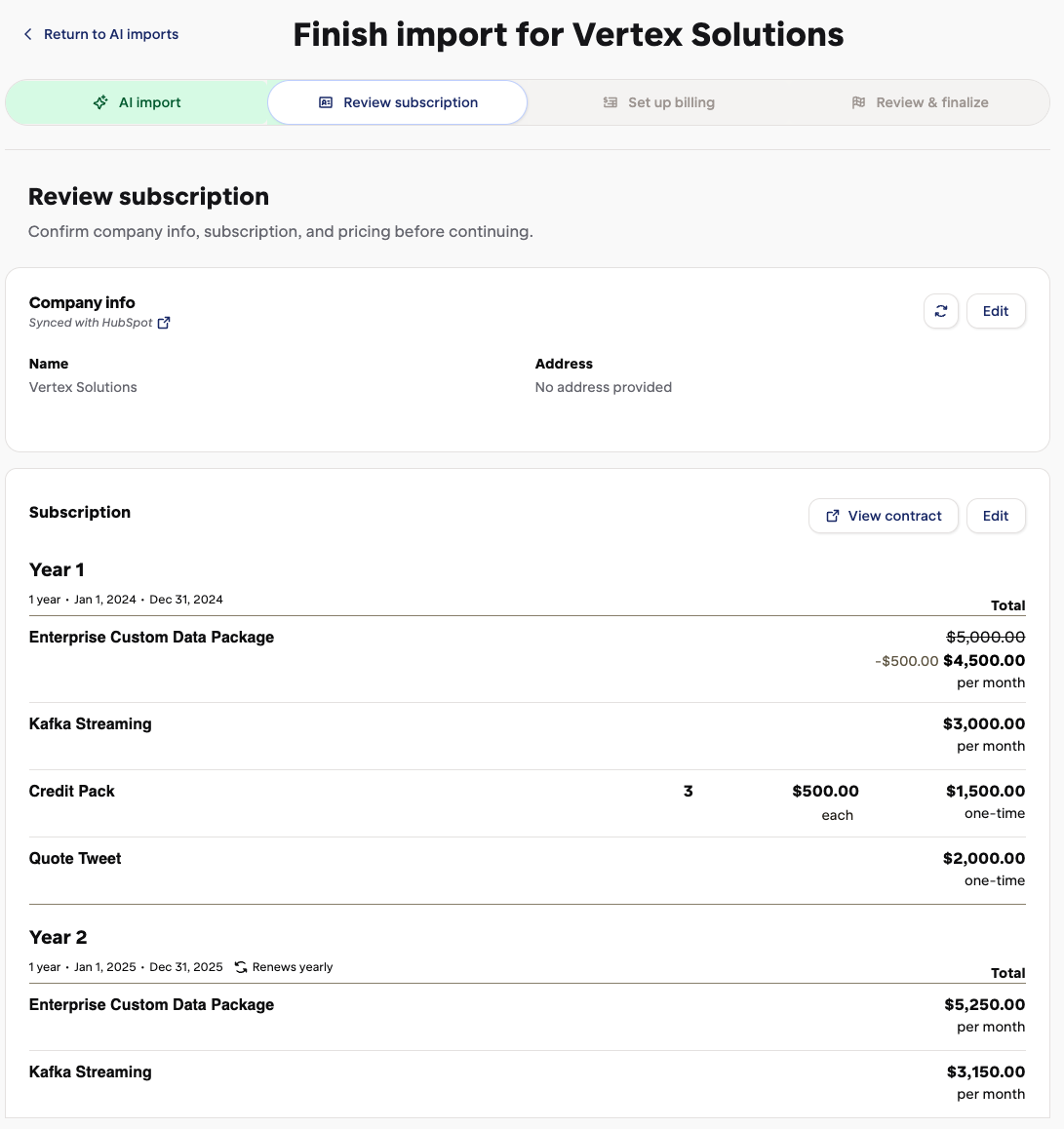
The gates and re-approval rules described here only work if the system enforces them. Turnstile does that inside its quote-to-cash system. A rule holds its downstream step until the right approver clears it, and a change to a material term resets only the approvals that term affects. The workflow you design is the workflow the system runs, rather than a policy document people are trusted to remember and follow under pressure.


.png)